Publications
Publications
Publications

i nā kiʻi ma mua, nā kiʻi ma hope / images at front, images at back
kekahi wahi, editors
2025
i nā kiʻi ma mua, nā kiʻi ma hope / images at front, images at back, edited and compiled by grassroots film initiative kekahi wahi, offers an incomplete genealogy of experimental, documentary, and non-narrative filmmaking of Hawaiʻi across multiple generations from the 1970s to mid 2020s.
Edited by grassroots film initiative kekahi wahi, i nā kiʻi ma mua, nā kiʻi ma hope is structured around an eight-part screening series of the same name which was curated, organized, and presented between 2022 and 2024 in Honolulu, New York City, Annandale-on-Hudson, Akita City (Japan), and Cologne (Germany).
Through newly commissioned essays, roundtable discussions, reflections, poems, production notes, script excerpts, scores, short work descriptions, exhibition documentation and video stills, this publication offers an incomplete genealogy of experimental, documentary, and non-narrative filmmaking of Hawaiʻi across multiple generations from the 1970s to mid 2020s.
ʻAi Pōhaku, Stone Eaters: Native Hawaiian Contemporary Art in Hawaiʻi, 1976–2023
Edited by Drew Kahuʻāina Broderick, Josh Tengan, and Noelle M.K.Y. Kahanu
2024
The 808-page publication, ʻAi Pōhaku, Stone Eaters: Native Hawaiian Contemporary Art in Hawaiʻi, 1976–2023, is a landmark resource documenting the exhibition ʻAi Pōhaku, Stone Eaters (2023) and its broader historical and cultural context.
ʻAi Pōhaku, Stone Eaters, curated by Drew Kahuʻāina Broderick, Josh Tengan, and Noelle M.K.Y. Kahanu featured the work of forty Native Hawaiian contemporary artists and creatives, took place from January 22–August 25, 2023, at six exhibition venues across the University of Hawaiʻi System on Oʻahu.
Designed as a historical record and an incomplete sourcebook, the publication gathers textual and visual materials about Hawaiian artists, curators, educators, and their stories of art cultivated over the past half-century through newspaper clippings, full-page reviews, reprinted and newly written essays, artist interviews, and critical reflections that explore the intersections of creative expression, cultural resurgence, and ea.

TUTUVI NEWSPRINT
Tutuvi (Colleen Kimura)
2024
Colleen Kimura got her start as a fashion designer in Hawaiʻi during the Hawaiian cultural resurgence of the 1970s. From 1972 to 1978 she ran Kimura’s—a studio, gallery, and venue. In 1980, shortly after returning home to Hawaiʻi from Fiji, where she was stationed for two years as a Peace Corps Volunteer, Colleen transformed Kimura’s into Tutuvi. Named after the Fijian word meaning “to wrap oneself up,” Tutuvi was a direct outcome of her experiences abroad, an eclectic mix of cultural practices and aesthetic concerns.
In the late 1990s, Colleen and her studio assistant, Jason Teraoka, started creating works on paper together as a byproduct of Tutuvi garment production. Before screen printing designs on bolts of fabric, they would cover the ends of the studio table with pages from the daily newspapers to ensure that any overprinting could be easily cleaned up after the fact. As layers of high-contrast partial prints from different designs accumulated haphazardly on reused newsprint, Colleen and Jason saw an opportunity to transform remnants of their printing process into finished works of art.
Over 25 years later, in March 2024, a selection of these happy studio accidents was the focus of a modest exhibition, TUTUVI NEWSPRINT, at Arts & Letters Nuʻuanu. This loose leaf publication accompanies the framed works, as a way of disseminating and preserving the ephemeral quality of the original prints on newspaper. Each full sized poster is a full-scale replication of each print, offset printed on acid free paper. The insert, featuring text and a variety of Tutuvi hand-drawn logos, was printed in house at Tropic Editions Studio on a Risograph.
The Healer’s Wound: A Queer Theirstory of Polynesia (Second Edition)
Dan Taulapapa McMullin
2024
The Healer's Wound: A Queer Theirstory of Polynesia (Second Edition) is an artist's book, a poet's collage, based on years of archival research by Sāmoan fa'afafine artist and poet Dan Taulapapa McMullin. Originally published in 2022, this second edition re-imagines much of the material presented by the first edition, and expands with a new collection of poems punctuating the existing work. The half-size, coil-bound format invites readers to treat the publication less as a finished project and more as a journal. The work of healing is ongoing.

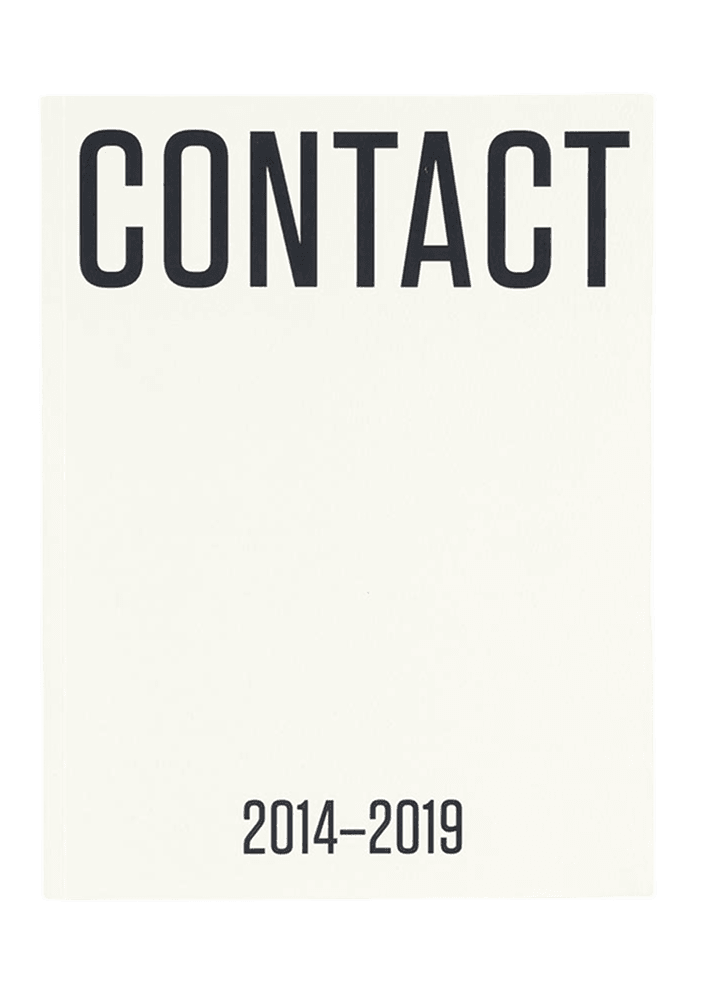
CONTACT 2014-2019
Drew Kahuʻāina Broderick, Marika Emi, Maile Meyer, Josh Tengan, eds.
2021
From 2014–2019, the annual exhibition CONTACT was a fixture in the contemporary art scene in Hawai‘i. From its arrival in 2014, to the most-recent Acts of Faith at the Hawaiian Mission Houses in 2019, CONTACT has become the most comprehensive, thematic exhibition of contemporary art made in Hawai‘i by Hawai‘i artists. The show has been thoughtfully curated by individuals in/out of our root culture, to deepen the dynamic of contact and to widen our understanding of our lived experiences here.
Pu’uhonua Society and Tropic Editions are pleased to present CONTACT 2014–2019, a retrospective catalogue featuring a selection of essays, statements, artworks, and ephemera from the CONTACT exhibition series. Edited by co-founders Drew Broderick and Maile Meyer, as well as Josh Tengan and Marika Emi, this publication serves as document, archive, and celebration of Hawai‘i’s rich, ongoing cultural and creative legacy.
Nā Ala Kūpuna o Kāʻū: Place Names and Legends
Moʻolelo by Tūtū Herbert Kūʻumi In and Tūtū Mary Kawena Pukui
Written by Richard Kekumuikawaiokeola Paglinawan
2021
In 1968, Kaʻū natives, Herbert Kūʻumi Kin In and Mary Kawena Pukui, shared moʻolelo (stories) to Richard Kekumuikawaiokeola Paglinawan and Lynette K. Kaopuiki Paglinawan as they traveled through Kaʻū, the southernmost part of Hawaiʻi Island.
Nā Ala Kūpuna o Kaʻū: Place Names and Legends—is a special collection of memories about storied places, songs, and riddles that honors the traditions and people of this wahi pana (legendary place).
Nā Ala Kūpuna o Kaʻū, a 144 page softcover publication with stories, music place names, maps, and remembrances will be shared with community published by Kaiao Press and Puʻuhonua Society.

HŌʻEU Mana
2024
Created by a group of wāhine practitioners dedicated to awakening the mana of wahi pana and ancestral voices through art and mo'olelo, the Hō'eu Mana Zine features stories and images to inspire and activate the mana in all us, our families, our Lāhui, and this precious 'āina. These are stories that have played an integral role in our culture, history, and genealogy. We hope you will feel a stirring too to learn these stories, to learn the names of the places in your community, the winds and rain, the sacred spaces, and the names of the kūpuna who have come before you. We hope they will speak to your heart, and reawaken, stir, activate the mana within us all. E hō'eu mana kākou!
We are a group of wāhine practitioners dedicated to reawakening the mana of wahi pana and ancestral voices through art and mo'olelo. Our ʻāina is the keeper of these stories. Stories that have played an integral role in our culture, history, and genealogy. We hope you will feel a stirring too to learn these stories. To learn the names of the places in your community, the winds and rain, the sacred spaces, and the names of the kūpuna who have come before you. We hope these stories and images will inspire. That they will speak to your heart. And reawaken, stir, activate the mana that is in all of us, our families, our Lāhui, and this precious ʻāina. E hō‘eu mana kākou!

Miki ʻAi - Bite-sized Kānaka Knowledge Publications
The Miki ʻAi Series is our newest iteration of kānaka knowledge exchange publications, which include brown papers and miscellaneous publications as part of a continuing effort to create “community knowledge exchange.” Mikiʻai ma ka ʻōlelo means a finger-dip of poi, poetically referencing one getting a small taste or bite-sized piece of information on a topic.
Past publications include: Uluhaimalama: The Queen’s Garden; Ho’omana’o: Remembering the Kauluwela Boys; Makahiki - The Season of Lono; Haina 'ia mai ana ka puana o Hee Nalu: The Art and Legacy of Hawaiian Surling and Oli Mahalo and E Iho Ana cards.
We are proud to present the first issue of our new Mikiʻai series featuring a mikiʻai on the Makahiki season, interactive social media, and coloring activities, as well as common oli makahiki.

i nā kiʻi ma mua, nā kiʻi ma hope / images at front, images at back
kekahi wahi, editors
2025
i nā kiʻi ma mua, nā kiʻi ma hope / images at front, images at back, edited and compiled by grassroots film initiative kekahi wahi, offers an incomplete genealogy of experimental, documentary, and non-narrative filmmaking of Hawaiʻi across multiple generations from the 1970s to mid 2020s.
Edited by grassroots film initiative kekahi wahi, i nā kiʻi ma mua, nā kiʻi ma hope is structured around an eight-part screening series of the same name which was curated, organized, and presented between 2022 and 2024 in Honolulu, New York City, Annandale-on-Hudson, Akita City (Japan), and Cologne (Germany).
Through newly commissioned essays, roundtable discussions, reflections, poems, production notes, script excerpts, scores, short work descriptions, exhibition documentation and video stills, this publication offers an incomplete genealogy of experimental, documentary, and non-narrative filmmaking of Hawaiʻi across multiple generations from the 1970s to mid 2020s.

CONTACT 2014-2019
Drew Kahuʻāina Broderick, Marika Emi, Maile Meyer, Josh Tengan, eds.
2021
From 2014–2019, the annual exhibition CONTACT was a fixture in the contemporary art scene in Hawai‘i. From its arrival in 2014, to the most-recent Acts of Faith at the Hawaiian Mission Houses in 2019, CONTACT has become the most comprehensive, thematic exhibition of contemporary art made in Hawai‘i by Hawai‘i artists. The show has been thoughtfully curated by individuals in/out of our root culture, to deepen the dynamic of contact and to widen our understanding of our lived experiences here.
Pu’uhonua Society and Tropic Editions are pleased to present CONTACT 2014–2019, a retrospective catalogue featuring a selection of essays, statements, artworks, and ephemera from the CONTACT exhibition series. Edited by co-founders Drew Broderick and Maile Meyer, as well as Josh Tengan and Marika Emi, this publication serves as document, archive, and celebration of Hawai‘i’s rich, ongoing cultural and creative legacy.
ʻAi Pōhaku, Stone Eaters: Native Hawaiian Contemporary Art in Hawaiʻi, 1976–2023
Edited by Drew Kahuʻāina Broderick, Josh Tengan, and Noelle M.K.Y. Kahanu
2024
The 808-page publication, ʻAi Pōhaku, Stone Eaters: Native Hawaiian Contemporary Art in Hawaiʻi, 1976–2023, is a landmark resource documenting the exhibition ʻAi Pōhaku, Stone Eaters (2023) and its broader historical and cultural context.
ʻAi Pōhaku, Stone Eaters, curated by Drew Kahuʻāina Broderick, Josh Tengan, and Noelle M.K.Y. Kahanu featured the work of forty Native Hawaiian contemporary artists and creatives, took place from January 22–August 25, 2023, at six exhibition venues across the University of Hawaiʻi System on Oʻahu.
Designed as a historical record and an incomplete sourcebook, the publication gathers textual and visual materials about Hawaiian artists, curators, educators, and their stories of art cultivated over the past half-century through newspaper clippings, full-page reviews, reprinted and newly written essays, artist interviews, and critical reflections that explore the intersections of creative expression, cultural resurgence, and ea.
Nā Ala Kūpuna o Kāʻū: Place Names and Legends
Moʻolelo by Tūtū Herbert Kūʻumi In and Tūtū Mary Kawena Pukui
Written by Richard Kekumuikawaiokeola Paglinawan
2021
In 1968, Kaʻū natives, Herbert Kūʻumi Kin In and Mary Kawena Pukui, shared moʻolelo (stories) to Richard Kekumuikawaiokeola Paglinawan and Lynette K. Kaopuiki Paglinawan as they traveled through Kaʻū, the southernmost part of Hawaiʻi Island.
Nā Ala Kūpuna o Kaʻū: Place Names and Legends—is a special collection of memories about storied places, songs, and riddles that honors the traditions and people of this wahi pana (legendary place).
Nā Ala Kūpuna o Kaʻū, a 144 page softcover publication with stories, music place names, maps, and remembrances will be shared with community published by Kaiao Press and Puʻuhonua Society.

TUTUVI NEWSPRINT
Tutuvi (Colleen Kimura)
2024
Colleen Kimura got her start as a fashion designer in Hawaiʻi during the Hawaiian cultural resurgence of the 1970s. From 1972 to 1978 she ran Kimura’s—a studio, gallery, and venue. In 1980, shortly after returning home to Hawaiʻi from Fiji, where she was stationed for two years as a Peace Corps Volunteer, Colleen transformed Kimura’s into Tutuvi. Named after the Fijian word meaning “to wrap oneself up,” Tutuvi was a direct outcome of her experiences abroad, an eclectic mix of cultural practices and aesthetic concerns.
In the late 1990s, Colleen and her studio assistant, Jason Teraoka, started creating works on paper together as a byproduct of Tutuvi garment production. Before screen printing designs on bolts of fabric, they would cover the ends of the studio table with pages from the daily newspapers to ensure that any overprinting could be easily cleaned up after the fact. As layers of high-contrast partial prints from different designs accumulated haphazardly on reused newsprint, Colleen and Jason saw an opportunity to transform remnants of their printing process into finished works of art.
Over 25 years later, in March 2024, a selection of these happy studio accidents was the focus of a modest exhibition, TUTUVI NEWSPRINT, at Arts & Letters Nuʻuanu. This loose leaf publication accompanies the framed works, as a way of disseminating and preserving the ephemeral quality of the original prints on newspaper. Each full sized poster is a full-scale replication of each print, offset printed on acid free paper. The insert, featuring text and a variety of Tutuvi hand-drawn logos, was printed in house at Tropic Editions Studio on a Risograph.

HŌʻEU Mana
2024
Created by a group of wāhine practitioners dedicated to awakening the mana of wahi pana and ancestral voices through art and mo'olelo, the Hō'eu Mana Zine features stories and images to inspire and activate the mana in all us, our families, our Lāhui, and this precious 'āina. These are stories that have played an integral role in our culture, history, and genealogy. We hope you will feel a stirring too to learn these stories, to learn the names of the places in your community, the winds and rain, the sacred spaces, and the names of the kūpuna who have come before you. We hope they will speak to your heart, and reawaken, stir, activate the mana within us all. E hō'eu mana kākou!
We are a group of wāhine practitioners dedicated to reawakening the mana of wahi pana and ancestral voices through art and mo'olelo. Our ʻāina is the keeper of these stories. Stories that have played an integral role in our culture, history, and genealogy. We hope you will feel a stirring too to learn these stories. To learn the names of the places in your community, the winds and rain, the sacred spaces, and the names of the kūpuna who have come before you. We hope these stories and images will inspire. That they will speak to your heart. And reawaken, stir, activate the mana that is in all of us, our families, our Lāhui, and this precious ʻāina. E hō‘eu mana kākou!
The Healer’s Wound: A Queer Theirstory of Polynesia (Second Edition)
Dan Taulapapa McMullin
2024
The Healer's Wound: A Queer Theirstory of Polynesia (Second Edition) is an artist's book, a poet's collage, based on years of archival research by Sāmoan fa'afafine artist and poet Dan Taulapapa McMullin. Originally published in 2022, this second edition re-imagines much of the material presented by the first edition, and expands with a new collection of poems punctuating the existing work. The half-size, coil-bound format invites readers to treat the publication less as a finished project and more as a journal. The work of healing is ongoing.

Miki ʻAi - Bite-sized Kānaka Knowledge Publications
The Miki ʻAi Series is our newest iteration of kānaka knowledge exchange publications, which include brown papers and miscellaneous publications as part of a continuing effort to create “community knowledge exchange.” Mikiʻai ma ka ʻōlelo means a finger-dip of poi, poetically referencing one getting a small taste or bite-sized piece of information on a topic.
Past publications include: Uluhaimalama: The Queen’s Garden; Ho’omana’o: Remembering the Kauluwela Boys; Makahiki - The Season of Lono; Haina 'ia mai ana ka puana o Hee Nalu: The Art and Legacy of Hawaiian Surling and Oli Mahalo and E Iho Ana cards.
We are proud to present the first issue of our new Mikiʻai series featuring a mikiʻai on the Makahiki season, interactive social media, and coloring activities, as well as common oli makahiki.

i nā kiʻi ma mua, nā kiʻi ma hope / images at front, images at back
kekahi wahi, editors
2025
i nā kiʻi ma mua, nā kiʻi ma hope / images at front, images at back, edited and compiled by grassroots film initiative kekahi wahi, offers an incomplete genealogy of experimental, documentary, and non-narrative filmmaking of Hawaiʻi across multiple generations from the 1970s to mid 2020s.
Edited by grassroots film initiative kekahi wahi, i nā kiʻi ma mua, nā kiʻi ma hope is structured around an eight-part screening series of the same name which was curated, organized, and presented between 2022 and 2024 in Honolulu, New York City, Annandale-on-Hudson, Akita City (Japan), and Cologne (Germany).
Through newly commissioned essays, roundtable discussions, reflections, poems, production notes, script excerpts, scores, short work descriptions, exhibition documentation and video stills, this publication offers an incomplete genealogy of experimental, documentary, and non-narrative filmmaking of Hawaiʻi across multiple generations from the 1970s to mid 2020s.

TUTUVI NEWSPRINT
Tutuvi (Colleen Kimura)
2024
Colleen Kimura got her start as a fashion designer in Hawaiʻi during the Hawaiian cultural resurgence of the 1970s. From 1972 to 1978 she ran Kimura’s—a studio, gallery, and venue. In 1980, shortly after returning home to Hawaiʻi from Fiji, where she was stationed for two years as a Peace Corps Volunteer, Colleen transformed Kimura’s into Tutuvi. Named after the Fijian word meaning “to wrap oneself up,” Tutuvi was a direct outcome of her experiences abroad, an eclectic mix of cultural practices and aesthetic concerns.
In the late 1990s, Colleen and her studio assistant, Jason Teraoka, started creating works on paper together as a byproduct of Tutuvi garment production. Before screen printing designs on bolts of fabric, they would cover the ends of the studio table with pages from the daily newspapers to ensure that any overprinting could be easily cleaned up after the fact. As layers of high-contrast partial prints from different designs accumulated haphazardly on reused newsprint, Colleen and Jason saw an opportunity to transform remnants of their printing process into finished works of art.
Over 25 years later, in March 2024, a selection of these happy studio accidents was the focus of a modest exhibition, TUTUVI NEWSPRINT, at Arts & Letters Nuʻuanu. This loose leaf publication accompanies the framed works, as a way of disseminating and preserving the ephemeral quality of the original prints on newspaper. Each full sized poster is a full-scale replication of each print, offset printed on acid free paper. The insert, featuring text and a variety of Tutuvi hand-drawn logos, was printed in house at Tropic Editions Studio on a Risograph.

CONTACT 2014-2019
Drew Kahuʻāina Broderick, Marika Emi, Maile Meyer, Josh Tengan, eds.
2021
From 2014–2019, the annual exhibition CONTACT was a fixture in the contemporary art scene in Hawai‘i. From its arrival in 2014, to the most-recent Acts of Faith at the Hawaiian Mission Houses in 2019, CONTACT has become the most comprehensive, thematic exhibition of contemporary art made in Hawai‘i by Hawai‘i artists. The show has been thoughtfully curated by individuals in/out of our root culture, to deepen the dynamic of contact and to widen our understanding of our lived experiences here.
Pu’uhonua Society and Tropic Editions are pleased to present CONTACT 2014–2019, a retrospective catalogue featuring a selection of essays, statements, artworks, and ephemera from the CONTACT exhibition series. Edited by co-founders Drew Broderick and Maile Meyer, as well as Josh Tengan and Marika Emi, this publication serves as document, archive, and celebration of Hawai‘i’s rich, ongoing cultural and creative legacy.

HŌʻEU Mana
2024
Created by a group of wāhine practitioners dedicated to awakening the mana of wahi pana and ancestral voices through art and mo'olelo, the Hō'eu Mana Zine features stories and images to inspire and activate the mana in all us, our families, our Lāhui, and this precious 'āina. These are stories that have played an integral role in our culture, history, and genealogy. We hope you will feel a stirring too to learn these stories, to learn the names of the places in your community, the winds and rain, the sacred spaces, and the names of the kūpuna who have come before you. We hope they will speak to your heart, and reawaken, stir, activate the mana within us all. E hō'eu mana kākou!
We are a group of wāhine practitioners dedicated to reawakening the mana of wahi pana and ancestral voices through art and mo'olelo. Our ʻāina is the keeper of these stories. Stories that have played an integral role in our culture, history, and genealogy. We hope you will feel a stirring too to learn these stories. To learn the names of the places in your community, the winds and rain, the sacred spaces, and the names of the kūpuna who have come before you. We hope these stories and images will inspire. That they will speak to your heart. And reawaken, stir, activate the mana that is in all of us, our families, our Lāhui, and this precious ʻāina. E hō‘eu mana kākou!
ʻAi Pōhaku, Stone Eaters: Native Hawaiian Contemporary Art in Hawaiʻi, 1976–2023
Edited by Drew Kahuʻāina Broderick, Josh Tengan, and Noelle M.K.Y. Kahanu
2024
The 808-page publication, ʻAi Pōhaku, Stone Eaters: Native Hawaiian Contemporary Art in Hawaiʻi, 1976–2023, is a landmark resource documenting the exhibition ʻAi Pōhaku, Stone Eaters (2023) and its broader historical and cultural context.
ʻAi Pōhaku, Stone Eaters, curated by Drew Kahuʻāina Broderick, Josh Tengan, and Noelle M.K.Y. Kahanu featured the work of forty Native Hawaiian contemporary artists and creatives, took place from January 22–August 25, 2023, at six exhibition venues across the University of Hawaiʻi System on Oʻahu.
Designed as a historical record and an incomplete sourcebook, the publication gathers textual and visual materials about Hawaiian artists, curators, educators, and their stories of art cultivated over the past half-century through newspaper clippings, full-page reviews, reprinted and newly written essays, artist interviews, and critical reflections that explore the intersections of creative expression, cultural resurgence, and ea.
The Healer’s Wound: A Queer Theirstory of Polynesia (Second Edition)
Dan Taulapapa McMullin
2024
The Healer's Wound: A Queer Theirstory of Polynesia (Second Edition) is an artist's book, a poet's collage, based on years of archival research by Sāmoan fa'afafine artist and poet Dan Taulapapa McMullin. Originally published in 2022, this second edition re-imagines much of the material presented by the first edition, and expands with a new collection of poems punctuating the existing work. The half-size, coil-bound format invites readers to treat the publication less as a finished project and more as a journal. The work of healing is ongoing.
Nā Ala Kūpuna o Kāʻū: Place Names and Legends
Moʻolelo by Tūtū Herbert Kūʻumi In and Tūtū Mary Kawena Pukui
Written by Richard Kekumuikawaiokeola Paglinawan
2021
In 1968, Kaʻū natives, Herbert Kūʻumi Kin In and Mary Kawena Pukui, shared moʻolelo (stories) to Richard Kekumuikawaiokeola Paglinawan and Lynette K. Kaopuiki Paglinawan as they traveled through Kaʻū, the southernmost part of Hawaiʻi Island.
Nā Ala Kūpuna o Kaʻū: Place Names and Legends—is a special collection of memories about storied places, songs, and riddles that honors the traditions and people of this wahi pana (legendary place).
Nā Ala Kūpuna o Kaʻū, a 144 page softcover publication with stories, music place names, maps, and remembrances will be shared with community published by Kaiao Press and Puʻuhonua Society.